Skip to content

Custom container sealing machine solutions.

Fit the container. Match the workflow. Engineered for industrial & commercial production.

FitToSeal specializes in non-standard, custom-engineered container sealing machines built around your exact production workflow, alongside standard standalone platforms for straightforward, single-format applications. Whether you operate a commercial batch facility or a multi-shift industrial line, we coordinate the sealing platform, custom cavity tooling, upstream/downstream interfaces and sample checks with specialized manufacturing partners around how your plant actually runs.

Custom-engineered sealing systems built around your production workflow

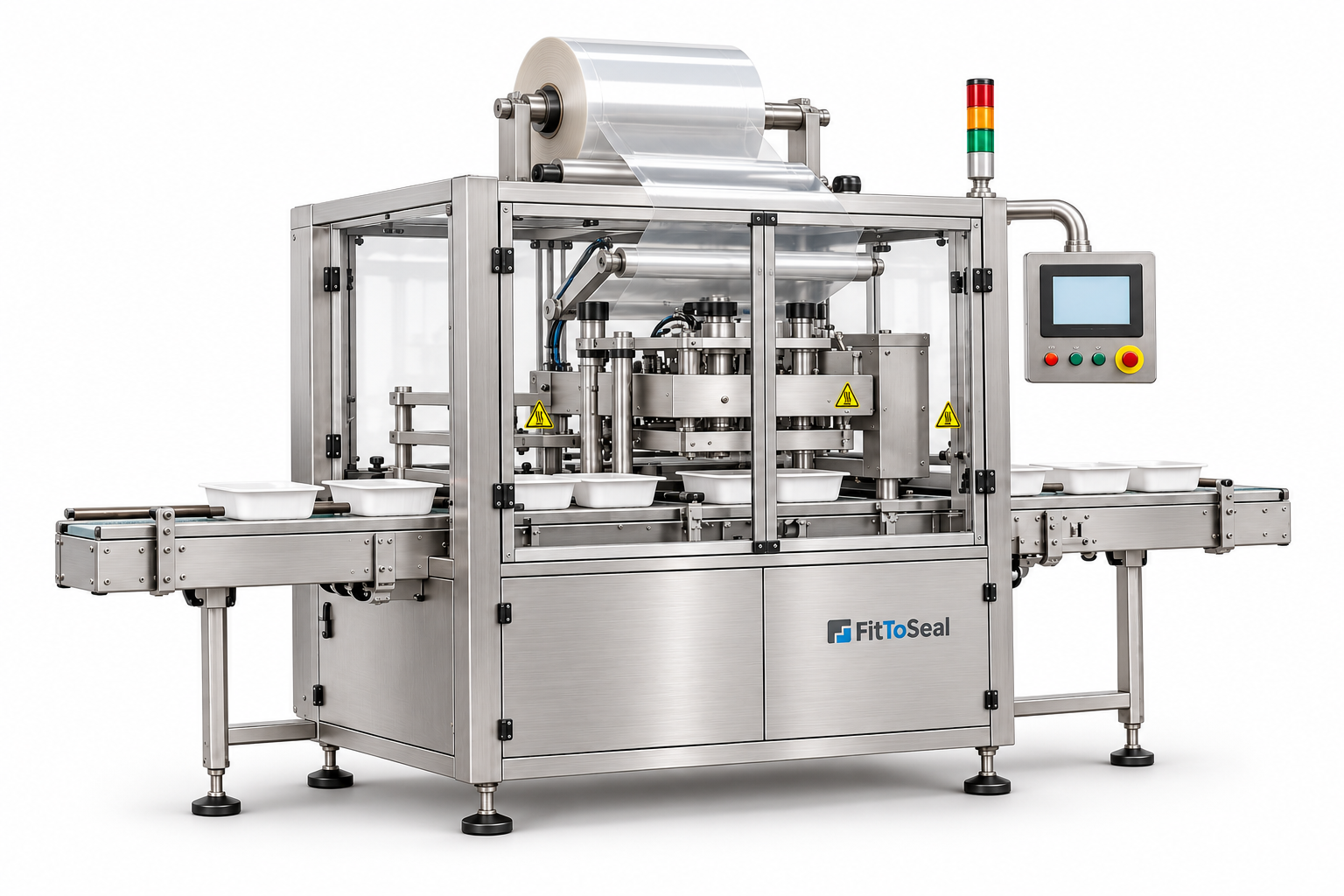
Custom inline container sealing machine with safety enclosure and conveyors for industrial production

FitToSeal specializes in non-standard, custom-engineered container sealing machines tailored to commercial and industrial production workflows, alongside standard standalone sealers for simple single-format runs. Preformed rigid or semi-rigid packs are closed via contact heat sealing (cups, bowls, trays, reagent tubes), electromagnetic induction (foil-lined screw caps on bottles and jars), or mechanical double seaming (metal and PET cans).

01 / Container & closure

Custom container sealing machines for your packaging format

Start with the complete pack and plant workflow: the container, its sealing surface, the lid or film, the product inside, and how packs enter and exit the station.

Standard catalog machines need careful assessment against flange tolerances, multi-SKU diameters, hot-fill splash and available line footprints. Closing a preformed pack reliably requires matching the sealing mechanism and custom-machined tooling to your exact container rim and workflow-not simply its nominal volume. Select your packaging format below to review critical engineering parameters or request a workflow review.

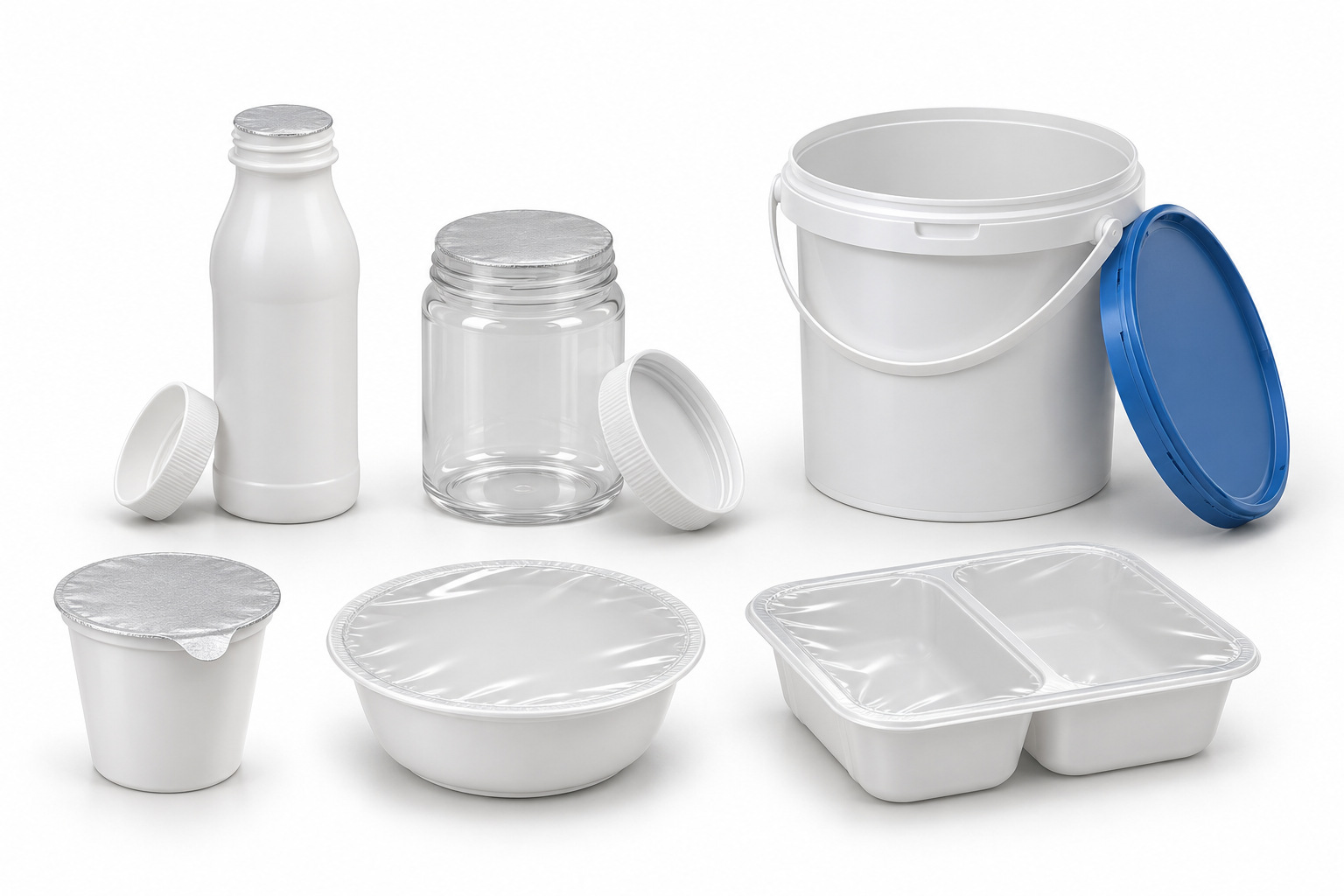
Cups, bowls, trays, bottles, jars and a bucket with different closures

Cups & tubs

Commercial dairy, beverage, sauce and specialty food cups or tubs are closed with roll-fed lidding film or individual pre-cut foil lids. Rim lip profile, wall stiffness and filled weight govern how each cup is supported inside a custom lower tooling nest.

  • Specify quick-change tooling nests and denesting adjustments across all cup diameters; identical nominal volume does not guarantee an identical flange fit on a container sealer.
Bowls

Wide-diameter or deep commercial and industrial food bowls require uniform perimeter support beneath the sealing flange. Compare round, oval and contoured openings, liquid headspace and anti-splash indexing through your filling-to-sealing transfer.

  • Even a round container sealing machine still needs a custom cavity nest and heated platen machined to your actual bowl rim profile, rather than outer diameter alone.

Trays & meal containers

Tray platform engineering depends on outer flange flatness, internal compartment layout, tray depth and barrier film structure. Ambient top heat sealing, modified atmosphere packaging (MAP) and vacuum skin packaging (VSP) require distinct platen and vacuum-chamber designs.

  • Decide whether internal divider ribs also require separating seals and whether the finished commercial pack needs an easy-opening corner peel tab.

Bottles

A foil membrane inside a screw cap commonly points toward non-contact induction sealing, while direct capless mouth sealing requires a custom contact heat platen review. Bottle height, neck finish, liner construction and cap application torque must be engineered together.

  • Capping and inner-membrane sealing are distinct operations in an industrial bottling workflow and require coordinated conveyor and control interfaces.

Jars

Wide-mouth jars hold commercial foods, powders, cosmetics or industrial and laboratory reagents, each with distinct closure demands. Specify plastic or glass body material, mouth dimensions, inner membrane seal and outer lid.

  • A foil liner or film structure that bonds cleanly to one jar resin should not be assumed suitable for another, even when both mouth openings share the same diameter.

Buckets & pails

Large opening diameters and heavy industrial filled loads dictate conveyor weight ratings, rim centering and operator ergonomics. Define whether your workflow applies a tamper-evident inner membrane, presses a snap lid, or completes both operations in sequence.

  • Include bail handle orientation, filled weight and clearance around the rim before finalizing a custom pail sealing layout.
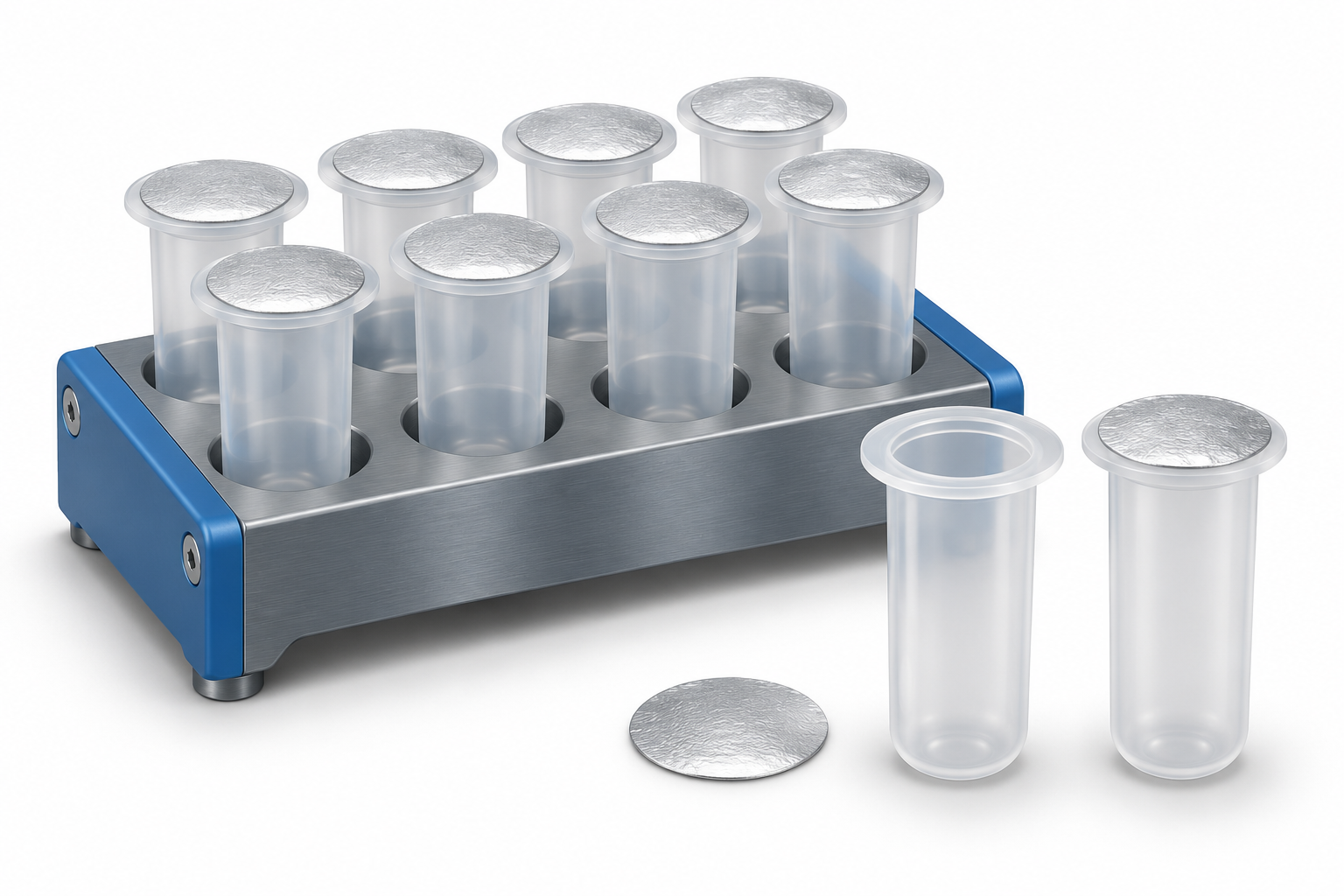
Reagent tubes with individual foil seals and a support rack for laboratory sealing

Laboratory & reagent tubes

For rigid and semi-rigid extraction, buffer or diagnostic sample tubes, begin with mouth geometry, flange flatness, tube resin and compatible foil or pierceable film. Custom rack-loaded tube sealers also require exact rack pitch spacing, tube height tolerance and full- versus partial-rack support.

Confirm how sealed tubes are separated and removed, how film trim waste is collected, and include rack loading and unloading time when evaluating batch workflow output. Rigid tube-mouth film sealing is a fundamentally different process from soft-tube tail crimping, flexible-tubing welding, screw capping and glass-ampoule flame sealing.

02 / Sealing method

Choose the right sealing process for your closure

Contact heat sealing, electromagnetic induction and mechanical can seaming solve fundamentally different packaging tasks. Compare the closure mechanisms before locking a custom machine platform.

Sealing route Typical packaging combination Engineering parameters to confirm

Contact heat sealing

A heat-sealable roll film or pre-cut foil lid bonded directly to a container flange.

Seal-layer resin compatibility, rim flatness, custom platen pressure, PID temperature profile and dwell time; plus roll-film registration or pre-cut lid placement.

Induction sealing

An aluminum foil liner held against a bottle or jar mouth, typically inside a screw cap.

Container and liner materials, cap fit and application torque, custom induction coil geometry and conveyor speed. An induction sealer does not apply or tighten the cap.

Can seaming

A rigid metal or clear PET can body joined mechanically to a metal end.

Can and end specifications, custom seaming chuck and roll tooling, format change parts and an agreed double-seam inspection method. Film-sealing tools cannot perform this operation.

Roll film, foil and pre-cut lid feeding

On a container heat sealing machine, roll-stock film and pre-cut die lids involve different feeding mechanisms. Roll-fed commercial and industrial workflows require web width, core diameter and eye-mark print registration specifications. Pre-cut lid magazines need a defined lid profile, stack flatness and reliable pick-and-place presentation to the sealing station. Secondary snap-on overcaps are handled as a separate downstream step.

MAP, vacuum and skin packaging

Shelf-life extension adds chamber and gas-handling requirements beyond simple rim closure. Modified atmosphere packaging (MAP) flushes oxygen with a defined gas blend; vacuum sealing evacuates headspace air; vacuum skin packaging (VSP) drapes barrier film closely around the product contour. Discuss your product and cold-chain storage objective first, then agree how the complete package will be evaluated.

Preformed container sealing vs. thermoforming lines

A container sealing machine works with premade cups, bowls, trays, bottles, jars or tubes delivered to your facility ready to fill and close. Thermoforming equipment forms the package from rollstock web prior to sealing and suits different tooling budgets and single-format run lengths. If your commercial or industrial operation uses rigid or semi-rigid preformed packs-or switches across multiple container geometries-specify a custom sealing platform engineered for premade packs.

03 / Workflow fit: Non-standard custom vs. standard

Custom workflow-engineered systems vs. standard machines

Our core engineering focus is building non-standard container sealing systems around your production workflow, while offering standard standalone machines for simple, fixed-format tasks.

Rather than forcing your plant layout, filling method or container geometry to fit an off-the-shelf catalog model, we start from your production workflow. Use the matrix below to see whether your operation fits a standard standalone platform or requires a custom workflow-engineered solution.

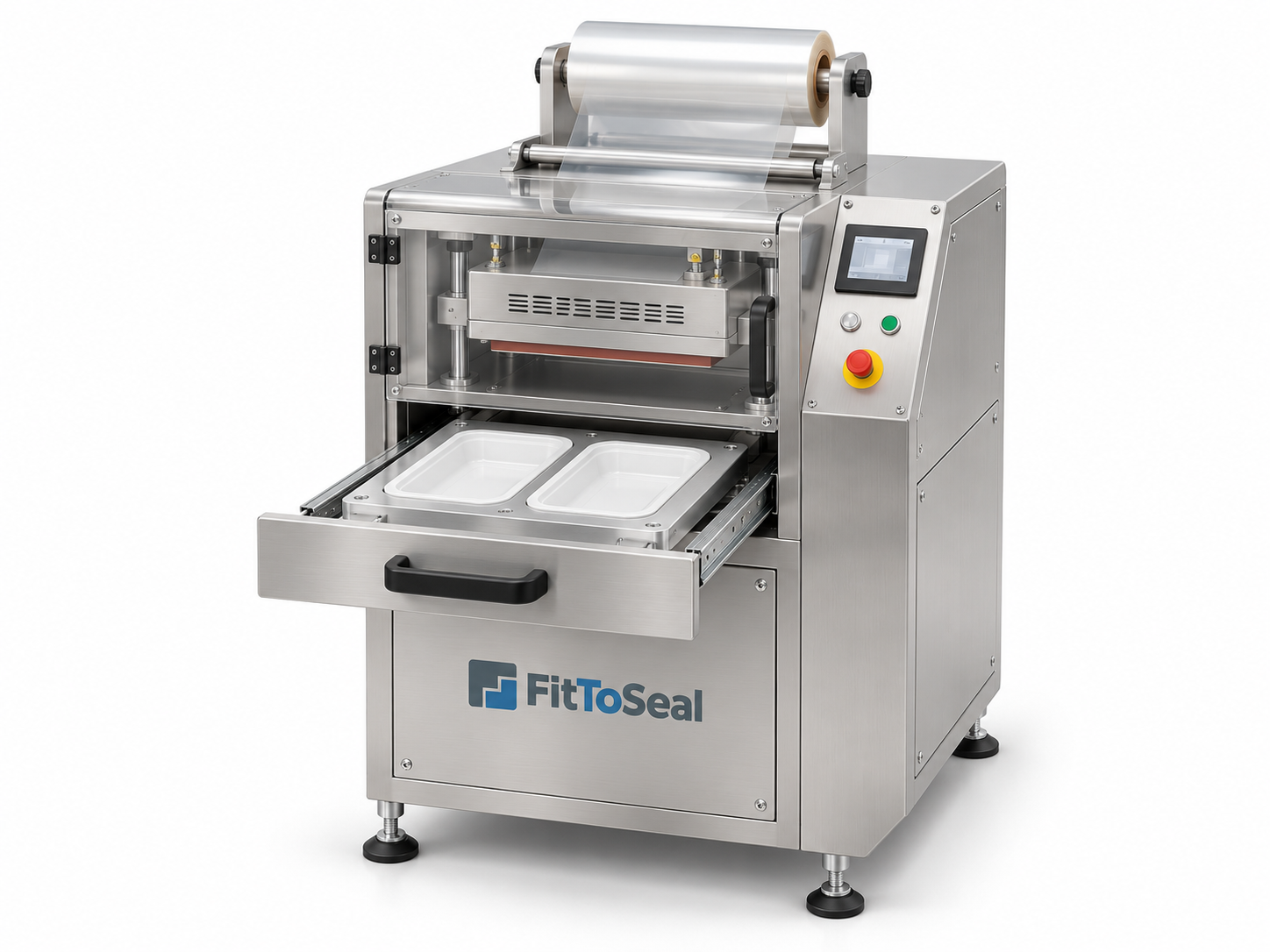
Semi-automatic tray sealing machine with a two-cavity loading drawer
Project scope Non-Standard Custom Workflow Systems (Core Focus) Standard Standalone Platforms

Container & tooling fit

Non-standard rims, deep bowls, multi-compartment trays, racked tubes or multi-SKU quick-change nests machined to your CAD drawings.

Single standard cup, tray or bottle neck size that matches existing baseline tooling without modification.

Production workflow & line integration

Synchronized with upstream denesting, volumetric/piston filling, gas flushing (MAP), date coding, checkweighing, reject gates or downstream pack-off.

Standalone manual or semi-automatic cell where operators hand-load and unload packs off-line.

Footprint, ergonomics & utilities

Tailored frame height, L-shaped or compact inline layout, washdown drainage, custom HMI recipes and plant-specific electrical/air interfaces.

Fixed catalog footprint and standard control panel suited to pilot labs, R&D trials or intermittent small batches.

Commercial batch vs. continuous industrial line architecture

A small container sealing machine-such as a compact benchtop hand-press unit-suits R&D labs, pilot runs or intermittent commercial batches, while a custom automatic inline sealing machine can reduce manual handling at agreed stages of high-volume industrial production; replenishment, changeovers and other tasks may still require operators. Whether using a rotary indexing table for compact multi-station filling and sealing or a linear shuttle conveyor for high-speed tray lines, always size the system around net accepted packs per shift rather than dry peak cycles.

Factor format changeovers into commercial & industrial ROI

List every container footprint, depth and batch size, including SKUs planned for later phases. Confirm which changes require custom interchangeable nests, guide rails, sealing heads or recipe presets, how many minutes the agreed changeover takes, and what the operator must verify before restarting. A higher-speed industrial sealer offers little benefit if frequent commercial SKU changes dominate the working day.

04 / Material compatibility

Match the sealing system to your material and product

“Plastic container” or “aluminium foil” is not a complete specification. Reliable bond strength depends on the two contacting surfaces and the conditions the finished pack must withstand.

Verify contacting seal layers

Provide the exact container resin-such as PP, CPET, APET, HDPE, LDPE, coated paperboard, glass or metal-alongside the film or liner’s inner heat-seal layer specification.

  • The visual appearance of a film or foil does not reveal its sealing chemistry. Ask your packaging converter for the actual layer datasheet and intended use, then validate the proposed pairing with physical samples before cutting custom tooling.

Account for product and rim conditions

Configure the custom sealing platen and machine frame around filling temperature, product viscosity, storage environment and transport handling. Liquid splash on a flange, powder dust at the mouth or a warped rim can compromise seal integrity.

  • For chemical, corrosive or sensitive industrial products, identify material and site constraints early. Cleaning access, stainless-steel washdown construction and resistance to planned sanitizing agents belong in the initial equipment specification.

Specify airtight, tamper-evident and peel performance

Decide whether your application requires an airtight hermetic barrier, a tamper-evident safety seal membrane removed before use, an easy-peel consumer film, or a pierceable closure for laboratory workflows.

  • Peel force consistency, pull-tab access, lid tearing and adhesive residue matter as much as cosmetic flatness. Reclosability usually relies on an additional snap lid or screw cap and should be specified separately from the primary seal.

Buying checkpoint: Agree the container, closure and product combination before locking custom machine settings. Increasing platen temperature or induction power cannot reliably compensate for chemically incompatible packaging materials.

05 / Industry applications

Custom sealing equipment across commercial & industrial sectors

Commercial producers and industrial plants use similar container shapes for very different hygiene, throughput and documentation goals. Select the closest application below to frame your technical brief.

We coordinate custom configuration of container sealing equipment with manufacturing partners and help specify the right sealing machine for containers around your actual package and plant workflow. Medical, pharmaceutical, biotech and laboratory projects may also require defined process records, cleaning access and validation documentation within the agreed supply scope.

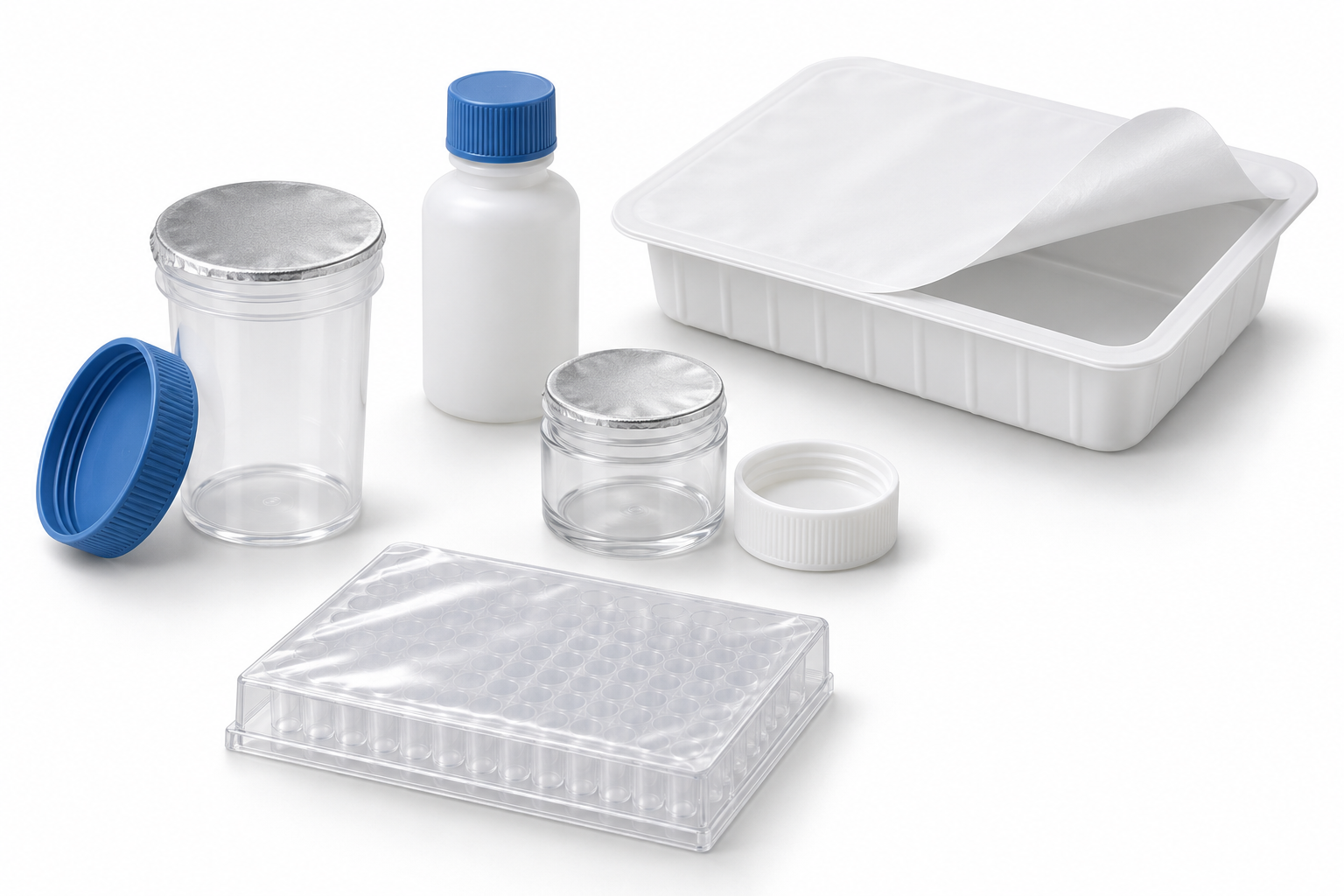
Medical specimen cups, reagent containers, a medical tray and a laboratory microplate

Food & beverage (commercial & industrial)

Commercial ready-meal kitchens, dairy processors, sauce packers and beverage bottlers running cups, bowls, trays, bottles and jars. Identify hot-fill temperatures, rim contamination risks, easy-open peel needs and chilled, frozen or ambient storage conditions.

Pharmaceutical & nutraceutical

Tablet, capsule, powder and liquid bottles or wide-mouth jars. Define the inner induction liner, cap torque window and evidence of first opening, together with required batch records. Sterile injectable closures require a separate technical assessment.

Medical & diagnostic products

Specimen cups, collection containers, diagnostic consumable packs and rigid device trays. Distinguish the primary container’s own closure from a protective outer pack, and state any sterile-barrier or cleanroom requirement.

Biotech & diagnostic reagents

Prefilled reagent tubes and extraction or buffer containers for assay kit manufacturing. Match the tube mouth, barrier film and opening or piercing method, then coordinate filling-to-sealing output and inspection requirements.

Laboratory samples

Tubes and racks for batch sample handling and storage, alongside reagent bottles, pots, reservoirs and microplates. Define rack loading, seal removal or piercing, evaporation control and cold-storage conditions. Review each tube or plate with its matching closure.

Chemicals & lubricants

Industrial bottles, jars and pails for cleaners, adhesives, oils and specialty chemicals. Share material compatibility, vented liner needs, corrosion resistance and site-environment requirements; hazardous products require an application-specific equipment assessment.

Agriculture & horticulture

Commercial and industrial containers for seed products, fertilizer, crop-care formulations and agricultural samples. Define the product form, moisture or leakage concerns, storage conditions and whether the package closure requires pressure venting.

Cosmetics & personal care

Cream jars, powder containers, soft tubes and liquid bottles. Compare the inner membrane, decorative outer closure and desired consumer opening experience, with attention to product compatibility and clean pack presentation.

Industrial & specialty products

Pots, tubs and trays for technical consumables, hardware kits and small components. Define handling, contamination protection, opening and batch traceability needs before selecting the closure and level of automation.

06 / Non-standard & custom workflow engineering

How we engineer custom sealing lines around your workflow

Because our core focus is engineering non-standard equipment around your production workflow, we treat the sealing station as an integrated part of your process-not an isolated box.

Custom cavity tooling and quick-change format parts

Adapting a sealer to a non-standard or multi-SKU container requires precision-machined lower cavity nests, contoured heater platens, profile-cut knives or bottle-neck guides.

  • Confirm perimeter support around the sealing flange, loading clearance and operator access for removing the finished pack. For a commercial or industrial family of containers, our proposal itemizes shared base tooling, adjustable or interchangeable format parts and any sizes outside the agreed operating envelope.

Upstream and downstream workflow integration

Map where operators load containers manually in a commercial batch cell and where automated industrial handling is justified. Denesting, volumetric or piston filling, date coding, checkweighing, leak/vision inspection and outer-lid application are engineered into a synchronized workflow.

  • Confirm conveyor elevation, pack travel direction, accumulation space and PLC handshake signals exchanged with existing machines. The custom sealing unit and each connected module require a clear owner in the project scope.

Heavy-duty handling, ergonomics and rack support

Thin-walled commercial packs, high liquid fills and heavy industrial buckets require tailored side guides and lift mechanisms. Review operator reach, cleaning access, film-roll replenishment and tooling storage. The floor layout also needs adequate clearance to operate, change formats and service the equipment safely.

For rack-loaded tubes, agree how the custom system supports different tube heights and detects or prevents incorrect rack loading. Identify the format parts needed for each rack layout, and separate the thermal dwell cycle from the time spent preparing and exchanging racks.

Site utilities, controls and documentation packages

State your facility electrical supply, compressed-air availability and any packaging gas or vacuum requirement. Confirm the HMI operator language, recipe memory, alarms and production records. Any additional documentation, calibration or qualification support should be specified explicitly in the quotation, particularly for regulated industrial environments.

Single-point engineering bridge: FitToSeal coordinates your workflow brief and our specialized manufacturing partner’s technical proposal so your approved pack, custom tooling drawings and scope of supply stay aligned from day one.

07 / Samples & acceptance

Verify sealing performance with your samples before order

Validate seal integrity, peel behavior and custom tooling fit using packs made with your actual containers, lidding materials and operating conditions.

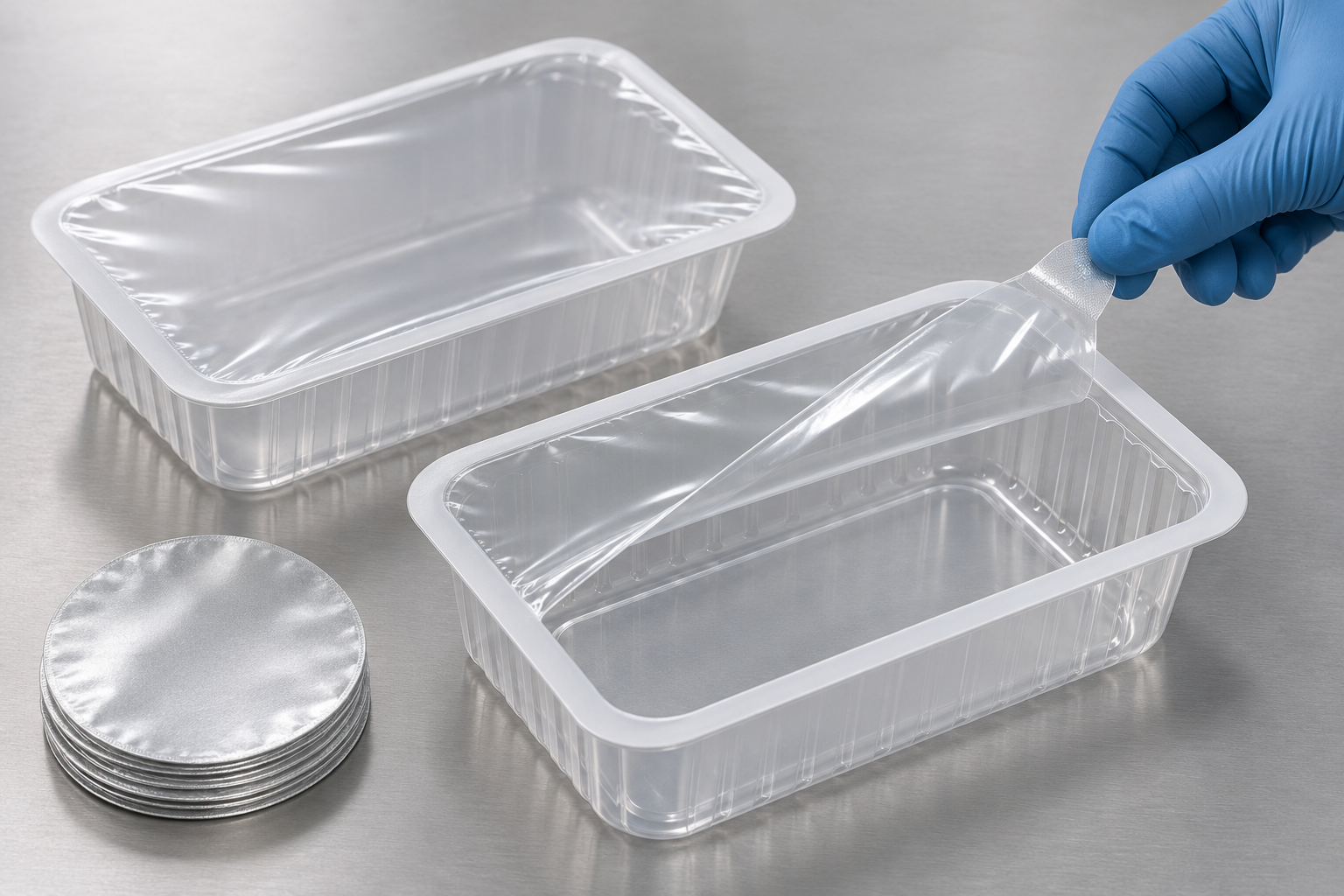
Gloved hand peeling lidding film from a tray beside a sealed sample and foil lids

Supply representative packaging

Provide the container CAD drawing and physical samples, roll film or pre-cut lids, caps and induction liners where applicable. Include the actual product or an agreed representative substitute when safe and practical. Record the sample supplier, material reference and drawing revision so a successful trial links directly to the packaging you will procure.

Agree the acceptance criteria

Evaluate cosmetic seal appearance, seal-band placement, peel-opening behaviour and an appropriate leak or integrity check for the intended pack. For seamed cans, include the specified double-seam measurements. Where industrial throughput matters, define the pack format, staffing and test duration. A photograph of a neat lid cannot establish leak resistance, shelf life or a sterile barrier.

Review process settings and repeatability

The sample trial report records the relevant temperature, dwell time, platen pressure or induction power settings, materials and observations, including rejects or unresolved issues. Discuss whether results remain acceptable across the agreed operating window. Subsequent changes in rim geometry, film construction, product conditions or packaging supplier require re-verification rather than copying previous settings.

Separate sample approval from equipment acceptance

A satisfactory sealed sample supports the packaging compatibility decision, while the formal equipment proposal defines the full custom machine acceptance scope. Equipment acceptance also covers agreed functions, sustained shift output, format changeovers, controls and technical documents. Establish what will be demonstrated during pre-shipment testing and what will be checked on site, with responsible parties identified in advance.

08 / Cost & quotation

What drives your equipment quotation and total cost

An accurate price comparison starts with identical container specifications, custom tooling cavities, workflow boundaries and delivery scope-not just a machine photograph.

Cost driver What changes the quotation

Standard platform vs. custom workflow build

A standalone standard unit uses existing frame and tooling geometry, whereas a non-standard custom workflow system includes dedicated mechanical, pneumatic/servo and PLC engineering.

Custom tooling cavities and format parts

List every container and lid combination, cavity count, profile-cutting tools and quick-change format parts. Identify what custom tooling is included in the base order and what is quoted as an option.

Upstream & downstream line integration

Separate the core sealing station from denesting, filling, date coding, inspection, conveyors and downstream handling. Confirm control and mechanical installation interfaces.

Testing, documentation and service

Specify sample trials, pre-shipment acceptance checks, required records, spare parts, export crating, delivery terms and startup support. Compare the complete supply scope.

Evaluate total operating cost per accepted pack

When comparing proposals, include compatible film or lid supply, web trim waste, wear parts, cleaning time, changeover labour and site utilities. Record the expected staffing and acceptable-pack rate used in your comparison. A lower initial purchase price may come with more manual handling or additional auxiliary purchases; the relevant benchmark is the total cost of the defined commercial or industrial production task.

For a custom container sealer machine quotation, send your pack specification and production workflow brief first. FitToSeal coordinates a matched configuration and itemized scope rather than presenting an unsupported universal price.

09 / Procurement process

Plan your sealing project from enquiry to startup

01 / Map your production workflow & pack specs

Share the container drawing or physical samples, closure type, upstream/downstream steps and net shift target. Identify all required commercial or industrial formats and whether the project replaces a standalone unit or integrates into a new or existing line.

02 / Review the custom engineering configuration

Review the proposed sealing platform, custom tooling cavities, feeding method, footprint layout, utilities and itemised scope of supply. Resolve open technical questions and identify the sample evidence needed before approving the configuration.

03 / Confirm sample trials and order scope

Agree any physical sample testing, pre-shipment acceptance procedure, final tooling drawings, technical documents and commercial terms. Record approved packaging or tooling revisions in writing so the order matches final production requirements.

04 / Prepare delivery and commissioning

Confirm site utilities, floor space, export shipment details, recommended spares and startup arrangements. Establish installation, operator training and technical-support responsibilities before equipment leaves the manufacturing site.

10 / Project support

Single-point engineering coordination and support beyond delivery

When comparing standard and custom equipment proposals, review responsibility for packaging compatibility and workflow integration as well as the machine itself. When evaluating a sealing machine supplier or manufacturer, FitToSeal serves as your single engineering and commercial point of contact-working with specialized manufacturing partners to custom-engineer non-standard equipment around your production workflow and explicitly defining who designs, fabricates, tests and services the line in your quotation and order documents.

Post-delivery support and international shipping logistics should be practical for your facility location and your operators. Define what your maintenance and production teams need to commission, run, clean, maintain and change over the selected equipment.

Installation and training

Agree remote video or on-site assistance, customer site preparations, operator training content and any travel costs in advance. Confirm who handles technical escalation during startup.

Maintenance and replacement parts

Identify routine wear parts (such as heater elements, thermocouples, silicone seals and cutting blades), recommended initial spares, ordering references and troubleshooting diagrams. Include custom format-part storage and replacement procedures.

Written project commitments

Lead time, warranty coverage, acceptance checks, export crating, delivery terms and service arrangements belong in the agreed quotation and contract for the selected configuration.

11 / Buyer questions

Container sealing machine FAQs

Do you specialize in non-standard custom equipment or standard catalog machines?

FitToSeal's core engineering focus is non-standard, custom-built equipment tailored to the customer's specific production workflow-covering custom cavity tooling, multi-SKU changeovers, upstream filling/denesting and downstream conveying. We also provide standard standalone machines for straightforward, single-format tasks that do not require line or tooling customization.

Can one container sealing machine seal several sizes and materials?

Within the same closure technology, a single custom sealer can cover an agreed range of containers using interchangeable format parts and recipe adjustments, subject to confirmation for every pack. Different dimensions require custom lower nests, sealing heads or guides; changing container resin or closure method may require another platform. Ask for a format matrix showing the parts and setup required for each SKU combination.

Are a container sealer and a container sealing machine the same thing?

Both terms describe equipment for closing preformed containers, though neither identifies the closure mechanism by itself. A heat-sealed cup, an induction-sealed bottle and a seamed can require entirely different platforms. The complete container-and-closure specification is the most reliable starting point for selecting a container sealer.

Can a sealing system make an airtight or leak-resistant pack?

Hermetic or airtight performance depends on the complete package and an agreed test method. Custom platen geometry, packaging materials, flange flatness and process settings all contribute. Define the leakage or barrier requirement in measurable terms, then evaluate representative sealed packs. A machine specification or visual check alone cannot prove leak integrity.

Can the equipment be configured for medical, diagnostic or cleanroom containers?

Start with the specific specimen cup, reagent bottle, tube, tray, reservoir or microplate and its required closure. A medical tray seal, a foil-lined screw cap and a microplate film are distinct engineering tasks. State any contamination-control, recordkeeping or sterile-barrier requirement before custom configuration. Project suitability and validation support require technical confirmation.

What should we check before buying a tube-rack sealer?

Send tube and rack drawings, mouth dimensions, resin details and the proposed foil or pierceable film. Ask how the custom system handles full and partial racks, different tube heights, film slitting and trim waste collection. Agree the complete batch cycle time and required opening and storage checks. PCR, centrifuge and cryogenic tubes need individual compatibility review; their names alone do not establish a sealable rim.

Can sealing extend the shelf life of food or sensitive products?

Shelf life depends on product formulation, barrier film properties, headspace atmosphere, thermal processing and storage conditions. A sealing machine creates the physical closure; it does not establish a shelf-life period by itself. Set the package objective and arrange appropriate product-and-pack validation for your intended distribution conditions.

How do we compare quotes from different sealing machine manufacturers?

Avoid relying on subjective “best sealing machine” claims without an identical baseline. Use the same technical brief for each supplier: container drawings, all SKU formats, closure materials, product conditions, acceptable-pack output and workflow scope. Request an itemized list of included base equipment, custom tooling, sample testing, documents and after-sales service so price differences can be evaluated objectively.

12 / Your production brief

Request a custom container sealing machine proposal

Tell us how your commercial or industrial production workflow runs and what your line needs to seal. FitToSeal will use your brief to coordinate the custom engineering review and identify any remaining details needed for a matched proposal.

Prepare these details for your enquiry

  • Container drawing or clear photos, opening dimensions and filled weight.

  • Container material, film or lid specification, and every required SKU format.

  • Product type, commercial or industrial sector, filling temperature and storage conditions.

  • Current or planned production workflow (upstream filling/denesting and downstream coding/packing).

  • Target acceptable packs per hour, batch sizes and preferred automation level.

  • For tubes: tube height, rack layout, full or partial loading, and access after sealing.

  • Available floor space, site utilities and existing line connections.

  • Required sample checks, documentation and destination country.

If a specification is undecided, say so. A clear list of open questions is more useful than an assumed configuration.